In this 2025 guide, we explore the top home renewable energy solutions – rooftop solar panels, community solar programs, small residential wind turbines, home battery storage, and geothermal heating/cooling systems – with a focus on affordability and ease of installation. We’ll break down how each technology works, what it costs (and what incentives can help), installation considerations, and where each option makes the most sense (by climate, location, or home type). Whether you own a single-family home in the suburbs or live in an urban apartment, there’s a clean energy solution (or combination of solutions) that can help you save money and reduce your carbon footprint. Let’s dive in!

Solar Panels for Homes (Rooftop & Community Solar)
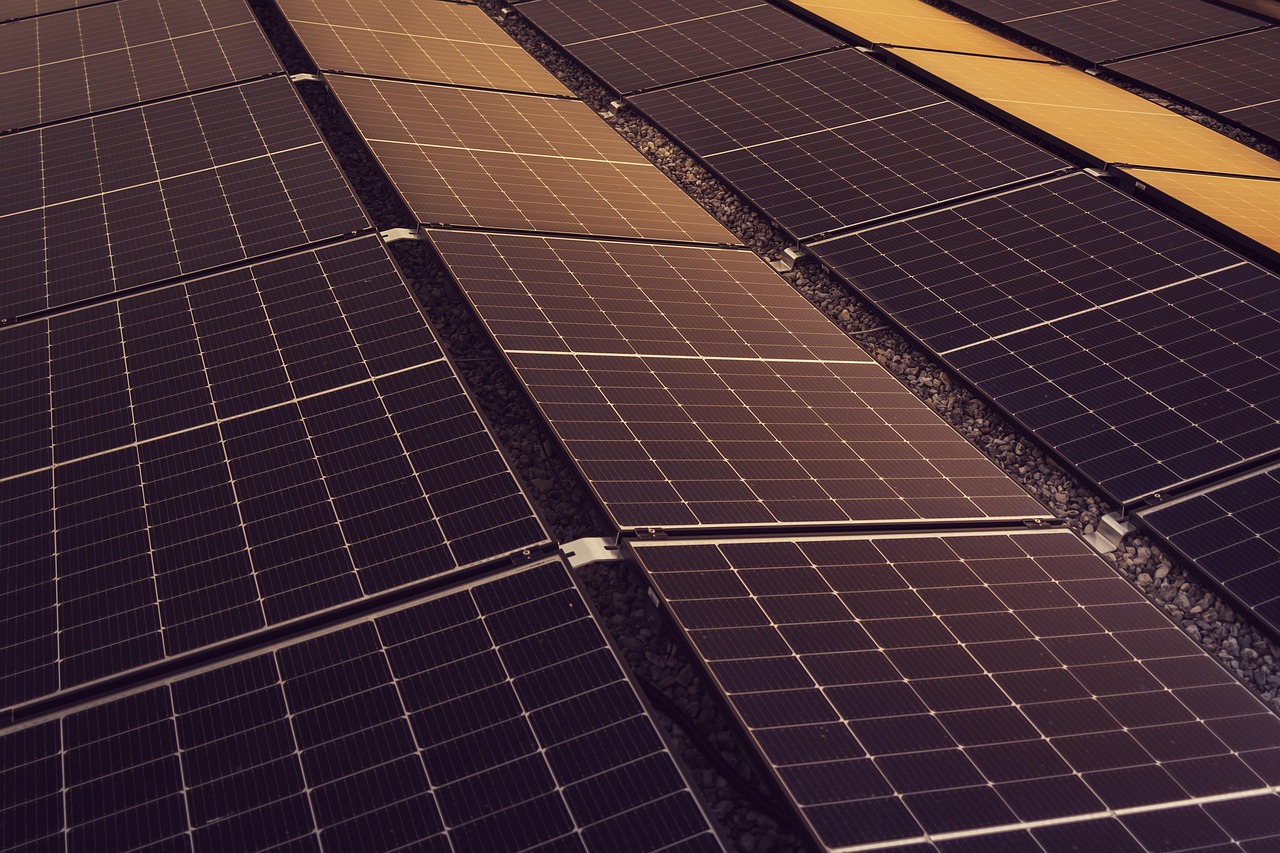
Rooftop solar panels on a suburban home. Solar panels are often the first and most cost-effective renewable upgrade for homeowners, converting sunlight into electricity.
How They Work: Solar photovoltaic (PV) panels convert sunlight into electricity to power your home. Panels are typically mounted on a sunny roof facing south or west for maximum exposure. Grid-tied solar systems let you use solar power in real-time and send excess generation to the utility grid (earning you credits via net metering). Even in northern climates, solar panels can produce significant energy year-round (sunny winter days can still generate power, though shorter daylight means less output). If you don’t have a suitable roof or you rent an apartment, community solar is an option: you subscribe to a shared solar farm in your region and receive credits on your electric bill for your portion of the power produced. This makes solar accessible even for those who can’t install panels on their own property.
Top Affordable Products (2025)
Solar panel prices have dropped dramatically over the past decade, and efficiency has risen. In 2025, most panels are 19–22% efficient. According to SolarReviews, the leading affordable brands include VSUN, Hyundai Energy Solutions, JA Solar, Trina Solar, and Mission Solar, all of which offer reliable panels with solid warranties at budget-friendly prices. For example, JA Solar’s latest 460W modules reach about 23% efficiency while keeping costs low. Choosing a value-oriented panel can save you a few hundred dollars on a typical installation without sacrificing much quality – panels themselves make up only ~12% of total system cost. Also, many installers offer all-in-one packages that include panels, inverters (devices that convert the panels’ DC power to usable AC power), and mounting hardware. Look for reputable installers who use Tier 1 panels and offer strong warranties (20-25 years is common for panel performance).
Installation Considerations: Installing rooftop solar is usually handled by professional contractors. They will evaluate your roof’s condition, sun exposure, and structural support. Ease of installation is relatively high for the homeowner (since pros do the work), but you’ll want to ensure your roof is in good shape (solar panels can last 25+ years, so a newer roof is ideal). Typically, racks are attached to your roof to hold the panels, and wiring is run to your home’s electrical panel. The process usually takes a few days of on-site work plus time for permits and inspections. In terms of difficulty, it’s not a DIY job for most people, but the industry is mature in the U.S. and Canada – thousands of qualified installers are available. If you live in an apartment or have significant shading (tall buildings or trees), consider community solar: with a simple signup, you can start getting solar credits without any installation at all. Community solar programs are expanding, with at least 24 U.S. states supporting them as of 2025, so even renters can enjoy savings and clean energy.
Cost Range & Incentives: The cost of a home solar panel system varies by size and location, but as of 2025 the average U.S. system (around 10–12 kW) costs about $25,000–$30,000 before incentives, or roughly $2.50 per Watt. After applying the 30% federal solar tax credit, the average cost comes down to about $20,000 (for a ~12 kW system). For example, a typical 12 kW setup might be around $29,650 before credit, and about $20,750 after the 30% credit. Smaller systems (say 5–6 kW for energy-efficient homes) would cost less; low-end installations (~5 kW) can be under $15,000 after credits, according to EnergySage.
In the U.S., the federal Investment Tax Credit (ITC) provides 30% off the total installed cost of solar systems (available at least through 2025). Many states and utilities offer additional incentives: these range from upfront rebates to performance-based credits. For instance, some states have Solar Renewable Energy Credit (SREC) markets or state tax credits that further improve affordability. Net metering, available in most states and Canadian provinces, is another financial boon – it allows you to earn bill credits for excess solar power sent to the grid, effectively “paying” you retail rate for your solar generation, which dramatically improves the payback. In Canada, federal and provincial programs are making solar more accessible too. The Canada Greener Homes Initiative offers an interest-free loan up to $40,000 for solar and other retrofits, plus grants up to $5,000 for installing solar panels on your home. Several provinces and cities have their own incentives: e.g. British Columbia has rebates of $1,000 per kW (up to $5k) for solar PV and additional rebates for battery storage, Nova Scotia offers $0.30/W up to $3,000 for solar, and others have net metering or property tax incentives. These programs can significantly reduce the upfront cost. Bottom line: after incentives, solar is more affordable than ever – many homeowners see payback periods around 5–10 years and then enjoy essentially free electricity for the life of the panels (which often keep producing 25+ years).
Best Climates & Homes for Solar: Solar works in most locales – you’d be surprised to know that even places with cold or moderate climates (Germany, for example) have widespread solar. The key is an unshaded area with decent sun. In the U.S., the highest output per panel occurs in sunnier states (California, Arizona, Florida, etc.), but panels in northern states or Canada still produce plenty over the year (they may even perform better on very cold, clear days since solar panels are more efficient at cooler temperatures). Snow can cover panels in winter; in snowy climates, installers often use steeper tilt angles or slick panel coatings to help snow slide off. Generally, a quick broom-push or waiting for sun will clear snow. Roof type matters a bit: asphalt shingle, metal, or tile roofs are all workable (flatter roofs or south-facing are ideal), but very complex or shaded roofs may limit how many panels you can fit. If your roof can’t host enough panels for your energy needs, ground-mounted solar arrays are an option if you have yard space.
For urban homeowners or condo dwellers, options include putting panels on a flat roof (if you have roof rights) or participating in community solar as mentioned. Community solar is particularly great for those in apartments or with HOA restrictions – you get typically 5–15% savings on your bill and support renewable energy without installing anything. In summary, solar panels are one of the easiest renewable upgrades and suit most homes with sunny exposure. They’re scalable (install just a few panels, or dozens), relatively quick to install, and thanks to incentives, very affordable in 2025 – making solar the go-to starting point for many homeowners going green.

Residential Wind Turbines (Small-Scale Wind Power)
How They Work: Wind turbines capture the kinetic energy of moving air. The turbine’s blades rotate when the wind blows, spinning a shaft connected to a generator that produces electricity. Residential wind systems come in various sizes: micro-turbines (rated a few hundred watts) often mount on rooftops or small poles and can charge batteries or feed minor loads, whereas larger home wind turbines (5 kW, 10 kW or more) are mounted on tall towers (60–120 ft high) in open areas and can produce a substantial portion of a home’s electricity if you have a strong wind resource. In practice, wind works best in consistently windy locations – think hilltops, open plains, coastal areas, or wide-open rural fields. As a rule of thumb, you’d want average wind speeds above ~10–12 mph (4.5–5.5 m/s) to make a wind turbine worthwhile. The turbine needs to be above obstructions: experts recommend mounting the turbine at least 30 feet above anything within 300 feet to avoid turbulence, especially in rural locations. Unlike solar, which produces some energy even on a cloudy day, wind turbines produce zero when the air is still – so site selection is critical. Many homeowners use wind turbines as a supplement to solar panels: for example, in some off-grid homes, a small wind turbine can generate power at night or during winter when solar is weaker.
Top Affordable Products (2025): The market for home wind turbines is smaller than for solar, but there are numerous kits and models available. For micro-wind (under 1 kW), popular budget-friendly models in 2025 include the Pikasola 400W wind turbine (about $270, great for beginners and the Automaxx DB-400 400W kit (around $600, includes controller). These units have 3-5 blades and typically come with charge controllers to charge a battery bank. Keep in mind, a 400W rating means that at a certain high wind speed (like ~30 mph), it can output 400 watts – in normal winds (10–15 mph) it will produce far less.
For larger needs, there are 1–5 kW turbines from companies like Missouri Wind & Solar, Primus Wind Power, Bergey, and Ryse Energy. For instance, a 2 kW turbine like the Ista Breeze i-2000 can generate around 2,000W at ~28 mph winds. There are also vertical-axis wind turbines (VAWTs) marketed for home use (they look like spirals or cylinders and claim to be quieter and bird-friendly). One example is the Happybuy 600W vertical turbine, a lantern-shaped unit capable of ~600W output. Vertical turbines are generally less efficient than traditional propeller-style turbines, but they can be an interesting choice for tight spaces or lower wind areas. Cost-wise, small wind kits (500W–1kW) can be as low as $500–$2,000. A mid-range 2kW–3kW turbine might run a few thousand dollars (not including the tower/pole and installation). Bigger systems (like a 10 kW Bergey Excel turbine) are more expensive (tens of thousands of dollars) but can meaningfully power a home. When shopping, look at the cut-in wind speed (how much wind to start producing power), durability (survival wind speed ratings), and whether the kit includes an inverter/charge controller. Many home turbines are DIY-friendly in terms of equipment, but be cautious: the tallest and most productive turbines will require concrete footings, guy wires, and possibly professional installation for safety.
Installation Considerations: Installing a residential wind turbine ranges from relatively simple (for a small 400W turbine on a short pole) to quite complex (for a multi-kW turbine on a tall tower). Ease of installation is much lower than solar – wind systems typically need: a suitable tower or mounting (and possibly a concrete foundation for towers), wiring from the turbine (which might be at the top of a 60+ ft tower) to your home’s electrical system or battery, plus possibly safety features like shut-off brakes. Small roof-mounted turbines (like the one pictured above) can be bolted to a sturdy section of roof or chimney, but keep in mind they can transmit vibration and noise. Most experts actually don’t recommend mounting turbines directly on a house because of noise and structural stress – a tower in the yard is preferred for anything but the tiniest units. Zoning and permits are another factor: many localities have height restrictions (often 35 feet in residential areas), and you may need permits for tall installations. You also want to consider neighbors – a wind turbine is much more visible than low-profile solar panels, and not everyone loves the look of a spinning rotor next door. Noise: modern small turbines are fairly quiet (a 2 kW turbine might be ~55 dB at 50 ft away – like a conversation at home). However, if the wind is howling, the turbine will produce a whir or hum that is noticeable. Vibration can also travel down a tower; good installations use vibration isolators. In summary, installing wind is more involved than solar: expect to possibly hire a specialized installer for larger turbines, and check regulations. It’s best suited for rural properties where you have space and friendly zoning.
Cost & Incentives: Home wind turbine costs vary wildly by size. Small off-grid turbines (under 1 kW) including mount might be only a few hundred dollars. For instance, a 600W rooftop turbine kit can be found under $1000. But these will only cover a fraction of a typical home’s usage (maybe powering a few batteries or a shed). To significantly offset a home’s electricity, you’d need something like a 5–10 kW turbine on a tower. The American Wind Energy Association estimates about $3,000–$5,000 per kilowatt of capacity for small wind system. That implies roughly $15,000+ for a 5 kW and $30k+ for a 10 kW system (before incentives). Some installers even cite higher ranges (up to $100k when including a tall tower, foundation, and pro installation). On the bright side, U.S. federal incentives apply here too: small wind installations qualify for the 30% federal tax credit (under the same ITC that covers solar). This credit (available through 2032) can knock the cost down significantly. Additionally, some states offer rebates for wind or include wind in renewable energy grant programs, particularly for rural homes and farms. For example, the USDA has programs for farm energy that can cover part of the cost. In Canada, incentives for residential wind are not as widely developed as solar – but you might leverage the Greener Homes loan for a wind project, or find provincial programs for off-grid homes. Net metering or feed-in tariffs can apply to wind just like solar: if your turbine is grid-tied, you can get credit for excess electricity you feed back. However, be aware that getting a grid interconnection for wind might require extra inspections or equipment (like a specific inverter and safety disconnects). Maintenance costs should be factored in as well: wind turbines have moving parts, so over a 20-year life you may need to replace bearings, tighten bolts, or even replace blades. These costs are generally modest but real – contrast this with solar, which has no moving parts and very low upkeep.
Best Situations for Home Wind: Small wind turbines shine in windy, open areas. If you live on a farm, ranch, or homestead with acreage – especially in a region known for wind (Great Plains states, coastal areas, hilltops) – a wind turbine could be a great addition, either standalone or paired with solar. Wind can be a strong complement in seasonal terms: for instance, in some northern plains locations, winter winds are very strong (when solar is weaker), so a hybrid wind+solar system gives more consistent year-round output. On the other hand, if you’re in a suburban neighborhood with lots of trees and houses blocking the wind, a turbine likely won’t get enough steady airflow to justify it. Urban areas are usually not suitable at all – turbulence from buildings makes wind power inefficient, plus permitting a tall tower in a city is tough. Climate-wise, wind works in cold or hot climates, as long as it’s windy. Turbines are designed to handle winter conditions (though icing can sometimes stop a turbine; some models have coatings to reduce ice buildup). If you have a site that’s far off the grid, a wind turbine can save you from running a generator by providing off-grid power (charging batteries) – indeed, many off-grid cabins use a small turbine to augment solar panels. Just remember: consistency is key. Check local wind resource maps or consult an installer who can estimate your site’s average wind speed. If your average is below ~10 mph, investing in wind will yield disappointing results – you’d likely be better expanding your solar array or pursuing other efficiency measures. In summary, residential wind is location-dependent: for the right home it’s a fantastic, green source of power, but for many homes it’s not as practical as solar. Always evaluate wind potential honestly before spending on a turbine.

Home Battery Storage Systems (Residential Energy Storage)
Home batteries store electricity for later use – for example, to supply your home at night or during outages, providing seamless backup power.
How They Work: Home battery systems (usually lithium-ion based) store electrical energy so you can use it whenever needed. Typically, these batteries are charged either by your solar panels (so you can use solar power at night or on cloudy days) or by the grid (such as charging up when electricity is cheap and discharging when it’s expensive or during a power outage). The most common form is a wall-mounted lithium-ion battery pack (usually 10–15 kWh of capacity) paired with an intelligent inverter/charger that manages energy flow. When your home needs electricity and solar isn’t producing (e.g. at night or during a blackout), the battery’s inverter will automatically supply power to your home circuits, keeping the lights on and appliances running. Modern systems are smart: you can often control them via smartphone, setting when to charge or discharge. Some batteries can even integrate with home energy management systems or generators for extended backup. Unlike a noisy gas generator, batteries provide silent, instant backup power. They are especially useful if you have frequent outages, no net metering (so you want to self-consume more of your solar), or want to avoid peak utility rates by time-shifting your energy use.
Top Affordable Products (2025): The home battery market has grown quickly. In 2025, a few brands stand out in terms of performance and value. The Tesla Powerwall is perhaps the best-known; the Powerwall 3 (Tesla’s latest) offers about 13.5 kWh usable capacity and is known for a good price-per-kWh (around $983 per kWh, making it one of the most cost-effective options). Tesla’s economies of scale and integration with their solar products have kept its cost relatively low and it includes a built-in inverter. Other top contenders: FranklinWH aPower 2 (15 kWh capacity – a newer entrant boasting a high capacity and robust performance), Enphase IQ Battery systems (modular, tie in neatly if you have Enphase solar microinverters), LG Energy Solution RESU batteries (renowned LG Chem line, though check for latest models and any recall updates from earlier versions), Sonnen Eco (premium brand with top-notch battery longevity and an integrated energy management system), and SolarEdge Energy Bank (great if you have SolarEdge inverters). There are also all-in-one systems like Panasonic EverVolt and Generac PWRcell, which come with battery modules and inverters as a package. Interestingly, 2025 has seen some new chemistry options too: for example, the Villara VillaGrid battery uses LTO (lithium titanate) chemistry for extremely long life and fast charging, albeit at a higher upfront cost. For affordability, most homeowners still choose lithium-ion (Li-ion) NMC or LFP chemistry batteries. Battery capacity: a typical single battery is around 10–15 kWh, which can run critical loads in an average home for about half a day to a full day (depending on usage). Many systems are modular, meaning you can stack multiple battery units for more capacity. For instance, two Tesla Powerwalls can give ~27 kWh, which could cover a couple of days of essential loads. When evaluating products, look at warranty (10 years is common), cycle life (most warrant at least 70% capacity remaining at 10 years or a certain number of cycles, often around 6000–10,000 cycles), and integration features (does it work with generators, solar, smart home, etc.).
Installation Considerations: Installing a home battery usually requires a professional electrician (often the same installer who does solar). The battery unit (or units) will be mounted (typically on a garage wall, utility room, or outside on an exterior wall in a protected enclosure). It connects to your home’s electrical panel through an inverter or directly if it’s an AC-coupled unit. Ease of installation for the homeowner is high (you let the pros handle it), but be aware: adding a battery to an existing solar system might require some rework of your electrical setup. Many battery systems need a gateway or critical load subpanel – essentially, during a power outage, the battery should only feed certain circuits (fridge, lights, outlets, etc.) and isolate from the grid for safety. This means your installer may set up a protected loads panel that the battery powers during outages. That adds some complexity and cost. If you’re installing solar + battery together from scratch, the process is smoother because the system can be designed as a whole. Space & location: Most home batteries are about the size of a suitcase or small fridge. For example, a Tesla Powerwall is roughly 45 inches tall, 30 inches wide, and 6 inches deep. They weigh a couple hundred pounds, so they need a sturdy mounting (wall studs or concrete). They can be installed indoors or outdoors, but ideally in a temperature-controlled or moderate environment (batteries prefer 50–86°F for best performance). Extremely cold garages might reduce efficiency in winter (some units have heaters). Noise is minimal – just a slight hum when actively cooling. Maintenance is low; maybe an occasional software update or checking that vents aren’t dusty. Electrical considerations: Your home’s electrical service may need an upgrade if you add a large battery and plan to pull high loads. However, most battery inverters cap output (e.g., 5 kW or 10 kW max), which is similar to a standard circuit. The installer will handle permitting and an inspection process (especially important because batteries, if mishandled, can be a fire hazard – so proper install is key). Overall, adding a battery is more complex than just solar panels, but many solar companies now specialize in “solar + storage” installs, making it fairly routine.
Cost & Incentives: Home battery systems are a significant investment, but costs are slowly coming down. In 2025, a typical 10–15 kWh battery system installed might cost on the order of $10,000 to $15,000 (roughly $1,000 per kWh, give or take). For example, the Tesla Powerwall is often quoted around $11k–$13k fully installed (before incentives) for one unit. Some competitors might be slightly more or less. If you need more storage (multiple units), costs scale roughly linearly, though there are usually some savings installing two at once vs. one now and one later. Incentives: The great news is that, in the U.S., the 30% federal tax credit also applies to battery storage systems when paired with solar. In fact, under current law (thanks to the 2022 IRA provisions), even a standalone home battery can qualify for the 30% credit, as long as it’s 3 kWh or larger. This has made adding a battery much more affordable than a few years ago. Some states offer extra incentives: California had the SGIP (Self-Generation Incentive Program) which provided rebates for home batteries (especially for those in high fire-risk zones or with medical needs). New York offers a state tax credit up to $5,000 for energy storage. Massachusetts has the ConnectedSolutions program that pays battery owners for allowing grid use during peaks. Check your state or utility – the patchwork of battery incentives is evolving quickly. In Canada, residential battery incentives are emerging as well. For instance, as noted earlier, British Columbia Hydro offers a rebate of $500 per kWh up to $5,000 for home battery installations (when paired with solar). Nova Scotia similarly provides $300/kWh (up to $2,500) for batteries when combined with solar. And the federal Greener Homes Grant can give up to $5,000 for a battery-storage retrofit in some cases (though this typically is when integrated with a solar PV project). Effect on electric bills: Batteries by themselves don’t generate energy, they only store it – so the direct savings come if you can shift when you draw from the grid. If your utility has time-of-use rates, a battery can charge off-peak (cheap) and discharge on-peak (expensive), saving money. If you have solar and no favorable net metering, storing excess solar to use later improves your solar ROI. Also, some utilities or programs will pay you to let them use your battery for grid support at times (this can earn a few hundred dollars a year in some programs like in Massachusetts or Vermont). When considering cost, you should also weigh the backup power value – what’s the cost of lost food in a freezer during a 2-day outage, or the value of keeping your sump pump running? For many, the resiliency is a major part of the battery’s “value.”
Where Batteries Make Sense: Home batteries are incredibly useful for certain scenarios. If you live in an area with frequent power outages (due to storms, wildfires, grid issues), a battery provides peace of mind that you’ll have electricity for essentials (or even whole-home power if you have multiple batteries) for the first hours or days of an outage. They kick in instantly when the grid goes down, which is fantastic if you have critical needs (medical devices, work-from-home servers, etc.). They’re also great if your utility has no net metering or uses time-of-use pricing – for example, some places credit very little for solar exports; in such cases, storing your midday solar to use in the evening is financially smart. In states like California or Hawaii, using a battery to avoid peak rates (which can be 2-3× higher in the evening) can significantly cut your bill. If you’re an off-grid homeowner, batteries (in conjunction with solar/wind and maybe a generator) are basically required to have power at night. Batteries also integrate well if you’re adopting an electric vehicle with bi-directional charging – in the near future, EVs themselves might act as home batteries. As for climate: batteries function in any climate, but extremely hot or cold temperatures can reduce their effective capacity slightly; thus, in very cold regions, you’d want the battery in a semi-conditioned space or inside an enclosure. One more consideration is home type: for renters or apartment dwellers, a traditional hardwired battery might not be an option (since you typically can’t modify the electrical system). However, there are emerging plug-and-play battery systems that can provide limited backup by simply plugging into an outlet (not whole-home, but maybe a single circuit or appliance). And even without that, apartment residents can consider high-capacity portable power stations (like big “solar generators” you can charge from a wall or portable solar panel) to serve as a mini-backup in emergencies – though those are not permanently installed solutions. In summary, home batteries add resiliency and can enhance the value of solar. They are becoming more affordable thanks to incentives and technological improvements, but they are still a substantial investment. For many homeowners, the ideal scenario is to install solar panels first (to reduce your overall energy costs) and then add a battery if your budget allows, to capture extra savings and provide backup power. By 2025, many new solar homeowners are opting for at least one battery at installation, effectively future-proofing their homes with a robust solar-plus-storage system.
Conclusion & Next Steps
Home renewable energy solutions have come a long way – what used to be niche or experimental is now mainstream and cost-effective. In 2025, a homeowner has a toolkit of options to cut utility bills and live more sustainably:
- Solar panels are often the first and easiest step – highly modular and now very affordable with 30%+ incentives, solar can meet much of your electricity needs with a simple roof install or via a community program.
- Wind turbines can be a great supplement for those in windy areas, though they require the right location and a bit more effort to install. For rural properties, small wind might provide power during the night or winter when solar doesn’t.
-
Home batteries don’t directly save energy, but they add resiliency and can maximize your use of solar (and other renewables). With prices dropping and incentives making them attractive, batteries are becoming the norm for solar homes wanting backup power and better energy control.
Calls to Action: Ready to take the next step? Here are some clear actions to consider:
-
Do an energy audit of your home. Before investing in any system, ensure your home is well-insulated and efficient. This can reduce the size (and cost) of the renewable systems you need. Simple fixes (LED lighting, smart thermostats, sealing drafts) go a long way.
-
Research local incentives and find reputable installers. Check government websites or databases for solar/wind/geo incentives in your area. Programs in the U.S. and Canada in 2025 are generous – take advantage while they last! Also, get multiple quotes. For solar, you can use online marketplaces or local certified contractors – compare equipment, warranties, and price per watt. For geothermal or wind, look for installers with specific experience (e.g., IGSHPA-certified for geothermal). Always ask for references or read reviews.
-
Consider your timeline and plan accordingly. If you have an older roof, maybe do that before solar. If your furnace is dying, it could be the perfect time for a heat pump upgrade. Map out a 5-year plan for your home. Many people start with solar (since it’s quick to install and immediately reduces bills) and later add a battery or tackle heating with heat pumps. Others doing new construction might do it all at once for a zero-energy home.
-
Explore financing options. Aside from grants and tax credits, look into 0% or low-interest loans (Green Home loans, PACE financing, utility on-bill financing, etc.). The goal is to have your monthly savings exceed the financing payment, so you are cash-flow positive from the start. Given the energy savings possible (especially with geothermal or large solar arrays), this can often be achieved.
-
Join community initiatives. If you’re a renter or simply want to do more, see if there are community solar gardens to join, or advocate for renewable installations on community buildings or schools. Some utilities offer green power purchase programs – while not as direct a benefit as home systems, they let you support renewable energy growth.
By embracing these renewable solutions, you’re not just saving money – you’re also contributing to a cleaner environment and a more resilient home. Imagine predictable, low energy bills and the peace of mind that comes with, say, knowing a storm won’t knock out your lights because your home battery has your back. In many cases, these upgrades pay for themselves and then some: for example, a solar panel system can save a homeowner tens of thousands of dollars over its life, and a geothermal system can yield savings equivalent to getting free heating every third year due to its efficiency.
2025 is a great year to act. Technology is mature, incentives are generous, and energy costs are not getting any cheaper. Whether you start with a small step (like swapping an appliance to a more efficient model or subscribing to community solar) or go big (like installing 20 solar panels and a backup battery), each move gets you closer to an affordable, sustainable home. Evaluate your home’s needs, consult professionals, and make a plan to implement the best renewable energy solutions for your situation. Your future self – and the planet – will thank you for it!